What We Do
The Dehcho First Nations Health and Wellness Division supports the Dehcho Region, to improve health and wellness by:
Overview
Administration
- Advocating for and co-developing improved health and wellness systems and policies; and learning from global best practice in Indigenous Health and Wellness. This area of work also includes innovating our work with new approaches to health and wellness rooted in Dene culture and approaches.
Regional Programs
- Delivering regional programs that may be culturally-rooted, immersed in Dene language, land-based, or healing-focused.
- Building capacity in the communities and the region to deliver and support health and wellness programs.
Regional Services
- This growing branch of the Division seeks to connect Dehcho Members to health and wellness-related services within the region and beyond.
Vision
All Dehcho people are positive, thriving and have a strong sense of Dene Athit’e. All Dehcho people live in healthy communities connected to their language, culture, and the land.
Guiding Principles and Core Values
The work of the Dehcho First Nations Health & Wellness Division is guided by key Dene laws, teachings, and core values. These are fundamental teachings that do not change over the lifetime of this work and must be kept central to all Health and Wellness programming, research, and advocacy. For the Dehcho First Nations Health & Wellness Division, as guided by the Elders and the Dehcho Health and Wellness Advisory Baord, four key Dene concepts have been identified as central to Health and Wellness work. For the most part, these concepts do not translate easily into English, and the descriptions below should not be seen as thorough definitions, rather the beginning of a journey of understanding for those unfamiliar with the concepts.
1. Mek’ı̨́ı̨́ Dene Ts’ı̨lı̨ – “Dene Laws”
- Share what you have – Ełeghaets’edendıh
- Help each other – Ełets’áts’ęndı
- Love each other as much as possible – Ełeghǫnets’etǫ
- Be respectful of elders and everything around you – Ǫhndah gots’edıhchá & godhąh ahsıı azhǫ chu
- Pass on the teachings – T’ahsıı ots’edıhshǫ gogháts’ıɂáh
- Be happy at all times – Łáǫlıh t’áh gogha gonezų
- Sleep at night and work during the day – Tedhe ts’ete & dzenę eghálats’ęnda
- Be polite and don’t argue with anyone – Dene ts’ę nahzų gots’ęh thá t’áh dene ahdahndı ıle
- Young girls and boys should behave respectfully – Ts’élıą gots’ęh denelıą ełegedıhchá gha góɂǫ
2. Dene Athit’e – “We are Dene”
- Dene Athit’e describes the understanding of oneself as a ‘True Dene’ in all that this entails holistically. For the Dehcho Health & Wellness Advisory Board, a Dene person must have a strong sense of self, rooted in Dene Athit’e, to be healthy and well. This includes how you think about the world, others, the land, and the nature around you. It shapes your frame of mind, but also how you see yourself. Language has been lost through colonialism and English has become the thinking language. Reclaiming language is fundamental to Dene Athit’e.
3. Nahe Náhodhe – “Dene Way of Life”
- Nahe Náhodhe also involves implementing Dene values and honoring and upholding Dene spirituality. This includes practicing, sharing, and encouraging the use of traditional knowledge, by knowing history, local plant and animal resources, medicine, and protocols. Upholding spirituality by following ceremonies and rituals, and practicing prayers is also part of Nahe Náhodhe.
- Dene people must also learn and share Dene Zhatie, culture, stories, and knowledge of the land. Passing down this information from generation to generation is a sacred duty of all Dene people, and crucial for the health and wellness of Elders, adults, youth and children alike. Elder Margaret Leishman said “If you are not passing on the story in your life, and are silent, you are creating an illness for yourself.
4. Dehcho K’ehodi – “Taking care of the land, and the land takes care of us”
- Taking care of the land, and the land takes care of us”
Finally, the concept of Dehcho K’ehodi describes the unique reciprocal relationship Dene people have with the land. While it literally translates to ‘Taking care of the Dehcho,’ it means that when Dene people are on the land in the Dene way, they protect and take care of the land, and in turn, the land takes care of the people. - Being on the land in the Dene way is a key component of Dene understanding of what it means to be healthy and well. Not only must the individual be working towards health, but their health is directly intertwined with the health of the land around them, and how they work to steward it.
Continue Reading
Recent News & Events
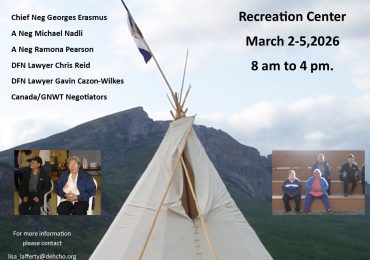

Dehcho Process Negotiation Session March 2–5 2026
Event Details Dates: March 2–5, 2026 Time: 8:00 am to 4:00 pm Location: Recreation Center, Nahanni Butte, NT Negotiation Team […]
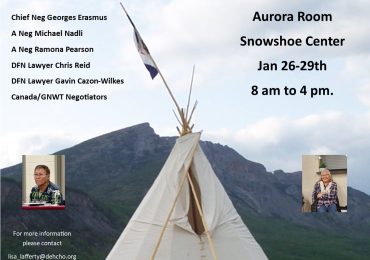
Dehcho Process Negotiation Session January 26–29, 2026
Dehcho Process Negotiation Session Dates: January 26–29, 2026 Time: 8:00 am to 4:00 pm Location: Aurora Room, Snowshoe Center, Fort […]